
Most Hispanic/Latino cities in Iowa research summary. We used Saturday Night Science to analyze Iowa’s most recent Census data to determine the most Hispanic/Latino cities based on the percentage of Hispanic/Latino residents.
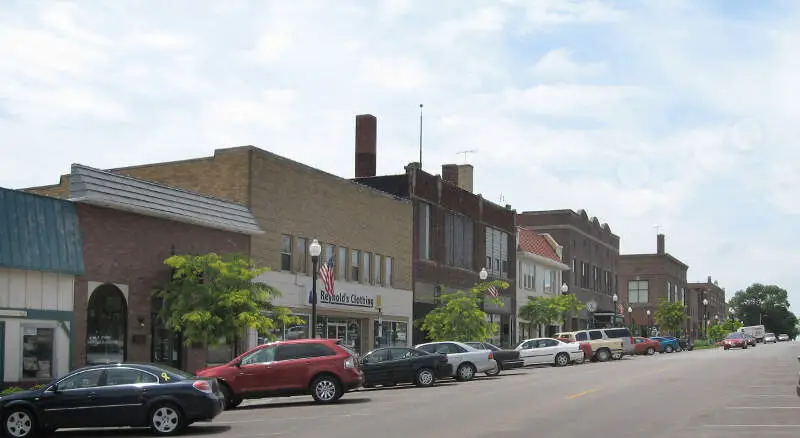
48.8% Hispanic · #1 most Hispanic in Iowa
 Located in
Crawford County, Iowa
Located in
Crawford County, Iowa
Denison is a city in Crawford County, Iowa, United States, along the Boyer River. The population was 8,298 at the 2010 census. It is the county seat of Crawford County.
Data | Crime | Cost of living | Movers
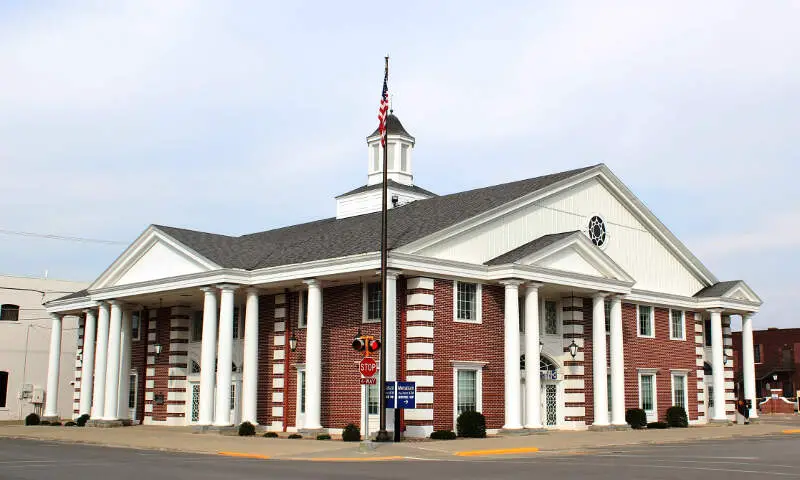
43.5% Hispanic · #2 most Hispanic in Iowa
 Located in
Buena Vista County, Iowa
Located in
Buena Vista County, Iowa
Storm Lake is a city in Buena Vista County, Iowa, United States. The population was 10,600 in the 2010 census, an increase from 10,076 in the 2000 census. It is the county seat of Buena Vista County. Storm Lake is home to Buena Vista University, originally Buena Vista College. Tyson Foods operates a large hog slaughterhouse, meat packing plant, and turkey processing plant in Storm Lake.
Data | Crime | Cost of living | Movers
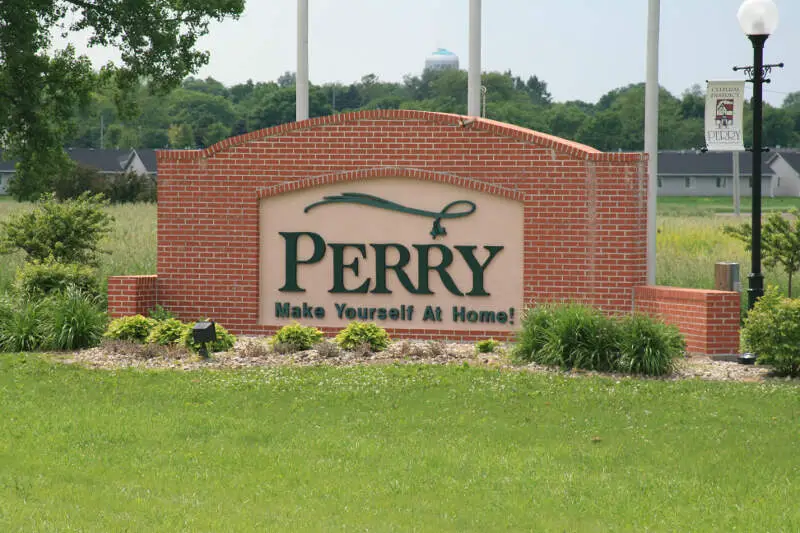
34.7% Hispanic · #3 most Hispanic in Iowa
 Located in
Dallas County, Iowa
Located in
Dallas County, Iowa
Perry is a city in Dallas County, Iowa, United States, along the North Raccoon River. The population was 7,702 at the 2010 Census. It is part of the Des Moines-West Des Moines Metropolitan Statistical Area.
Data | Crime | Cost of living | Movers
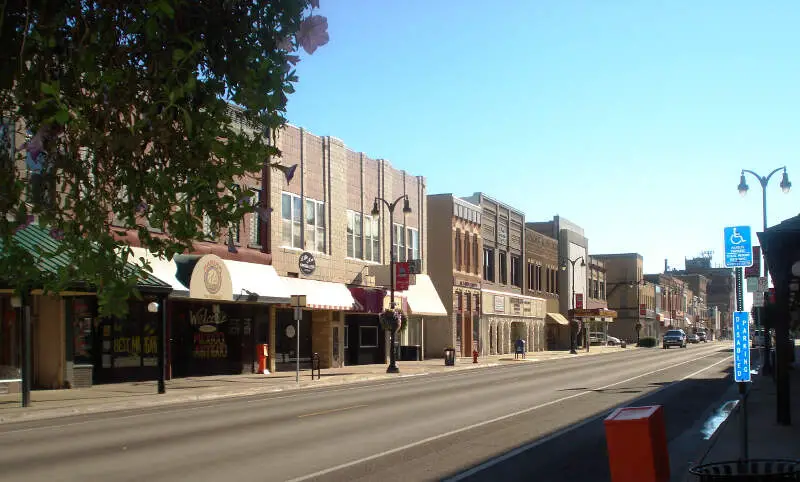
34.2% Hispanic · #4 most Hispanic in Iowa
 Located in
Marshall County, Iowa
Located in
Marshall County, Iowa
Marshalltown is a city in, and the county seat of, Marshall County, Iowa, United States. The population was 27,552 in the 2010 census, compared to 26,009 in 2000.
Data | Crime | Cost of living | Movers
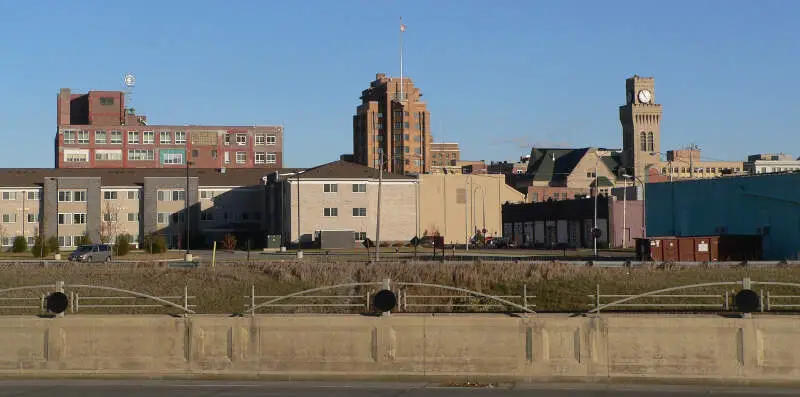
22.6% Hispanic · #5 most Hispanic in Iowa
Sioux City is a city in Woodbury and Plymouth counties in the northwestern part of the U.S. state of Iowa. The population was 82,684 in the 2010 census, which makes it the fourth largest city in Iowa. The bulk of the city is in Woodbury County, of which it is the county seat, though a small portion is in Plymouth County. Sioux City is located at the navigational head of the Missouri River. Often the city and surrounding area is referred to as Siouxland, especially by the local media and residents. The city is home to several cultural points of interest including the Sioux City Public Museum, Sioux City Art Center and Sergeant Floyd Monument, which is a National Historical Landmark. The city is also home to Chris Larsen Park, commonly referred to as -the Riverfront,- includes the Anderson Dance Pavilion, Sergeant Floyd Riverboat Museum and Lewis and Clark Interpretive Center. Sioux City is the primary city of the five-county Sioux City, IA-NE-SD Metropolitan Statistical Area, with a population of 168,825 in 2010 and a slight increase to an estimated 168,921 in 2012. The Sioux City-Vermillion, IA-NE-SD Combined Statistical Area had a population of 182,675 as of 2010 and has grown to an estimated population of 183,052 as of 2012.
Data | Crime | Cost of living | Movers
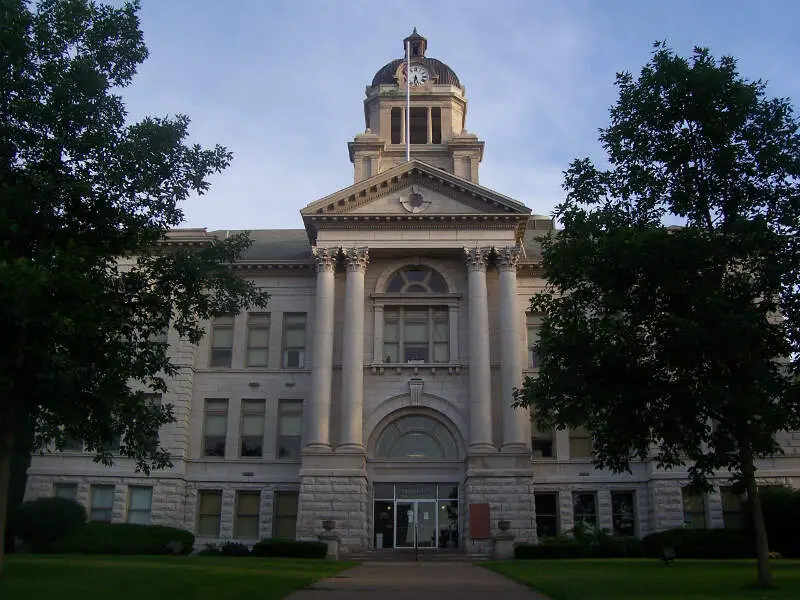
20.4% Hispanic · #6 most Hispanic in Iowa
 Located in
Muscatine County, Iowa
Located in
Muscatine County, Iowa
Muscatine is a city in Muscatine County, Iowa, United States. The population was estimated at 23,968 in 2015, an increase from 22,697 in the 2000 census. The county seat of Muscatine County, it is located along the Mississippi River. The local business association says that the name Muscatine is not used by any other community.
Data | Crime | Cost of living | Movers
17.1% Hispanic · #7 most Hispanic in Iowa
Data | Crime | Cost of living | Movers
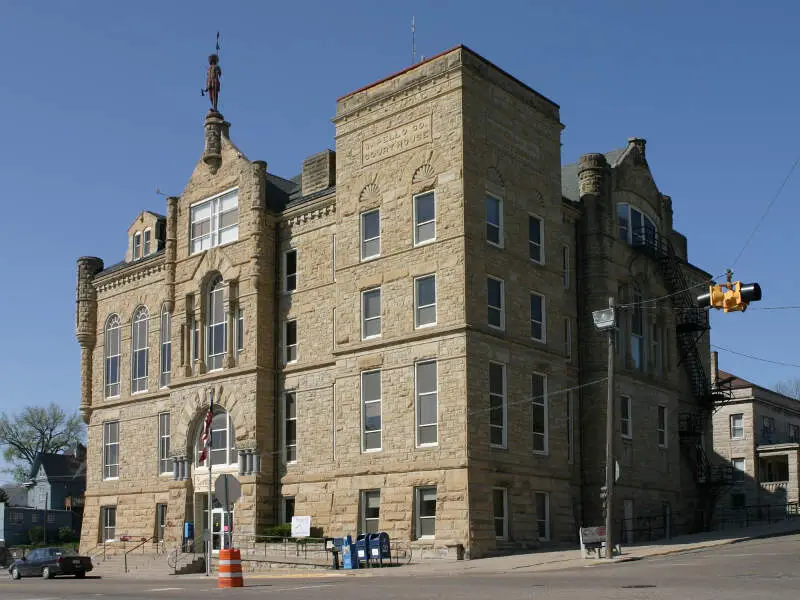
17.1% Hispanic · #8 most Hispanic in Iowa
 Located in
Wapello County, Iowa
Located in
Wapello County, Iowa
Ottumwa is a city in and the county seat of Wapello County, Iowa, United States. The population was 25,023 at the 2010 census. Located in southeastern Iowa, the city is split into northern and southern halves by the Des Moines River.
Data | Crime | Cost of living | Movers
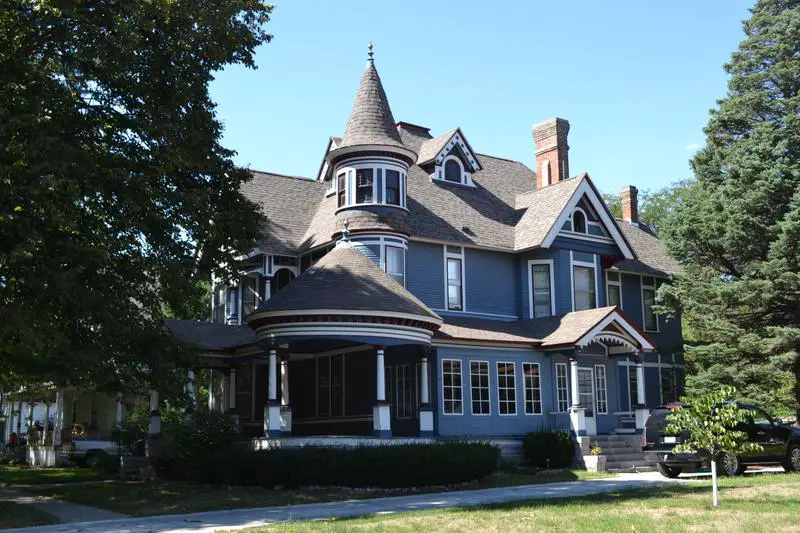
17.0% Hispanic · #9 most Hispanic in Iowa
Webster City is a city in Hamilton County, Iowa, United States. The population was 8,070 at the United States 2010 Census. It is the county seat of Hamilton County. Webster City is known as ‘Boone River Country’, as the Boone River meanders along the east side of the city.
Data | Crime | Cost of living | Movers
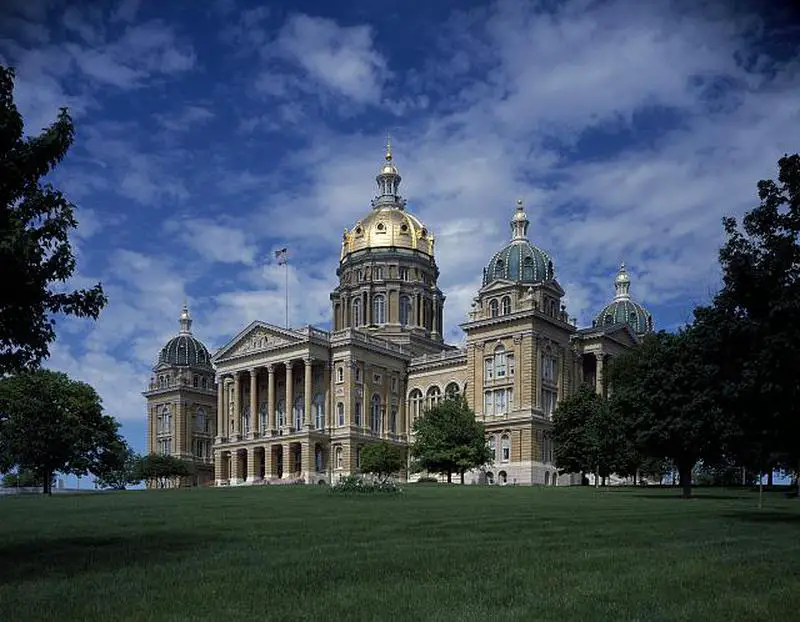
16.3% Hispanic · #10 most Hispanic in Iowa
 Located in
Warren County, Iowa
Located in
Warren County, Iowa
Des Moines is the capital and the most populous city in the U.S. state of Iowa. It is also the county seat of Polk County. A small part of the city extends into Warren County. It was incorporated on September 22, 1851, as Fort Des Moines, which was shortened to “Des Moines” in 1857. It is on and named after the Des Moines River, which likely was adapted from the French colonial name, Rivire des Moines, meaning “River of the Monks”. The city’s population was 203,433 as of the 2010 census. The five-county metropolitan area is ranked 89th in terms of population in the United States with 634,725 residents according to the 2016 estimate by the United States Census Bureau.
Data | Crime | Cost of living | Movers | Compare
The receipts
Compare the top ten
Pick a metric. The bars rescale. The red line is Iowa’s statewide median.
On the map
Where Iowa’s Hispanic and Latino communities live
Saturday Night Science
Methodology: How We Determined The Cities In Iowa With The Largest Hispanic Population For 2026
We used Saturday Night Science to compare data on race from the US Census for every city in Iowa.
Iowa’s most recently available data comes from the 2020-2024 American Community Survey.
Specifically, we looked at table B03002: Hispanic OR LATINO ORIGIN BY RACE. Here are the category names as defined by the Census:
- Hispanic or Latino
- White alone*
- Black or African American alone*
- American Indian and Alaska Native alone*
- Asian alone*
- Native Hawaiian and Other Pacific Islander alone*
- Some other race alone*
- Two or more races*
Our particular column of interest here was the number of people who identified as Hispanic or Latino.
We limited our analysis to places in Iowa with a population greater than 5,000 people. That left us with 76 cities.
We then calculated the percentage of Hispanic or Latino residents in each Iowa city. The percentages ranked from 48.8% to 0.6%.
Finally, we ranked each city based on the percentage of the Hispanic or Latino population, with a higher percentage being more Hispanic or Latino. Denison was the most Hispanic or Latino, while Red Oak was the least Hispanic or Latino city.
We updated this article for 2026. This article represents our eleventh time ranking the cities in Iowa with the largest Hispanic/Latino population.
The full plate
Cities In Iowa By Hispanic Population
Click any column to sort. Search by city name.
| Rank | City | Population | Hispanic Population | % Hispanic |
|---|---|---|---|---|
| 1 | Denison | 8,260 | 4,029 | 48.8% |
| 2 | Storm Lake | 11,428 | 4,969 | 43.5% |
| 3 | Perry | 7,985 | 2,772 | 34.7% |
| 4 | Marshalltown | 27,626 | 9,443 | 34.2% |
| 5 | Sioux City | 86,101 | 19,461 | 22.6% |
| 6 | Muscatine | 23,489 | 4,788 | 20.4% |
| 7 | Sheldon | 5,474 | 938 | 17.1% |
| 8 | Ottumwa | 25,430 | 4,356 | 17.1% |
| 9 | Webster City | 7,769 | 1,317 | 17.0% |
| 10 | Des Moines | 212,421 | 34,573 | 16.3% |
| 11 | Estherville | 5,839 | 782 | 13.4% |
| 12 | Clive | 19,012 | 2,431 | 12.8% |
| 13 | Sioux Center | 8,454 | 1,079 | 12.8% |
| 14 | Washington | 7,290 | 867 | 11.9% |
| 15 | Council Bluffs | 62,586 | 7,244 | 11.6% |
| 16 | Le Mars | 10,640 | 1,151 | 10.8% |
| 17 | Algona | 5,377 | 538 | 10.0% |
| 18 | Hiawatha | 7,206 | 701 | 9.7% |
| 19 | Mount Pleasant | 8,951 | 851 | 9.5% |
| 20 | Orange City | 6,426 | 604 | 9.4% |
| 21 | Nevada | 6,983 | 651 | 9.3% |
| 22 | Davenport | 100,913 | 9,065 | 9.0% |
| 23 | Fort Dodge | 24,827 | 2,214 | 8.9% |
| 24 | Iowa Falls | 5,038 | 426 | 8.5% |
| 25 | Waterloo | 67,008 | 5,616 | 8.4% |
| 26 | Cherokee | 5,154 | 416 | 8.1% |
| 27 | Iowa City | 75,752 | 6,104 | 8.1% |
| 28 | Glenwood | 5,144 | 384 | 7.5% |
| 29 | Urbandale | 46,595 | 3,341 | 7.2% |
| 30 | Mason City | 27,050 | 1,897 | 7.0% |
| 31 | Eldridge | 6,818 | 461 | 6.8% |
| 32 | Pleasant Hill | 11,136 | 745 | 6.7% |
| 33 | North Liberty | 21,125 | 1,378 | 6.5% |
| 34 | Altoona | 21,495 | 1,395 | 6.5% |
| 35 | West Des Moines | 71,083 | 4,603 | 6.5% |
| 36 | Waukee | 29,236 | 1,733 | 5.9% |
| 37 | Charles City | 7,232 | 423 | 5.8% |
| 38 | Newton | 15,700 | 896 | 5.7% |
| 39 | Spencer | 11,400 | 644 | 5.6% |
| 40 | Bettendorf | 39,647 | 2,228 | 5.6% |
| 41 | Coralville | 23,234 | 1,262 | 5.4% |
| 42 | Grimes | 16,366 | 864 | 5.3% |
| 43 | Keokuk | 9,662 | 508 | 5.3% |
| 44 | Cedar Rapids | 137,264 | 7,112 | 5.2% |
| 45 | Ames | 67,669 | 3,476 | 5.1% |
| 46 | Ankeny | 72,615 | 3,673 | 5.1% |
| 47 | Burlington | 23,728 | 1,134 | 4.8% |
| 48 | Clinton | 24,322 | 1,161 | 4.8% |
| 49 | Fort Madison | 10,133 | 483 | 4.8% |
| 50 | Fairfield | 9,456 | 449 | 4.7% |
| 51 | Centerville | 5,372 | 239 | 4.4% |
| 52 | Manchester | 5,191 | 218 | 4.2% |
| 53 | Carroll | 10,208 | 426 | 4.2% |
| 54 | Boone | 12,424 | 473 | 3.8% |
| 55 | Decorah | 7,535 | 284 | 3.8% |
| 56 | Creston | 7,435 | 272 | 3.7% |
| 57 | Waverly | 10,494 | 374 | 3.6% |
| 58 | Clarinda | 5,353 | 179 | 3.3% |
| 59 | Pella | 10,720 | 346 | 3.2% |
| 60 | Grinnell | 9,505 | 297 | 3.1% |
| 61 | Atlantic | 6,763 | 207 | 3.1% |
| 62 | Norwalk | 14,183 | 424 | 3.0% |
| 63 | Dubuque | 59,174 | 1,757 | 3.0% |
| 64 | Indianola | 16,044 | 459 | 2.9% |
| 65 | Oskaloosa | 11,504 | 325 | 2.8% |
| 66 | Marion | 41,896 | 1,154 | 2.8% |
| 67 | Johnston | 24,384 | 648 | 2.7% |
| 68 | Winterset | 5,416 | 132 | 2.4% |
| 69 | Clear Lake | 7,607 | 170 | 2.2% |
| 70 | Cedar Falls | 40,888 | 893 | 2.2% |
| 71 | Independence | 6,164 | 117 | 1.9% |
| 72 | Knoxville | 7,473 | 141 | 1.9% |
| 73 | Anamosa | 5,629 | 90 | 1.6% |
| 74 | Oelwein | 5,834 | 78 | 1.3% |
| 75 | Maquoketa | 6,075 | 61 | 1.0% |
| 76 | Red Oak | 5,510 | 33 | 0.6% |
Source: U.S. Census ACS 2020-2024. 76 cities with more than 5,000 residents.
Summary
Summary: Hispanic or Latino Populations Across Iowa
According to the most recent data, this is an accurate list if you’re looking for a breakdown of Latino populations for each place across Iowa.
The most Hispanic/Latino cities in Iowa are Denison, Storm Lake, Perry, Marshalltown, Sioux City, Muscatine, Sheldon, Ottumwa, Webster City, and Des Moines. Not sold on Iowa? Take the two-minute Find Your Place quiz and see which state actually fits you.
Questions and answers
Most Hispanic Cities In Iowa FAQs
What is the most Hispanic city in Iowa?
Denison is the most Hispanic or Latino city in Iowa for 2026, at 48.8% of residents. Storm Lake and Perry are next.
What cities in Iowa have the highest Hispanic population?
The Iowa cities with the highest Hispanic and Latino population shares are Denison, Storm Lake, Perry, Marshalltown, Sioux City, Muscatine, Sheldon, Ottumwa, Webster City, and Des Moines. We ranked all 76 places with more than 5,000 residents.
What percent of Denison is Hispanic?
Hispanic and Latino residents make up 48.8% of Denison, the highest share of the 76 Iowa places we measured. The numbers come from the Census Bureau’s American Community Survey.
What is the least Hispanic city in Iowa?
Red Oak is the least Hispanic or Latino city in Iowa, at 0.6%. It sits at the opposite end of the same ranking.
Where does this data come from?
Every share is calculated from the Census Bureau’s American Community Survey (2020-2024), based on residents identifying as Hispanic or Latino of any race. We rank each Iowa place with more than 5,000 residents.