

Which states are seeing the most extensive population decline over time? Actually, there are precisely ten of them. The rest of the states have seen slight increases or BIG gains in people. We’ll talk about where states people are moving to and why everyone’s leaving these states.
On average, every five years, Americans move to another home. It’s not always a dramatic move – say going from California to Colorado. Often, it’s close by – across town or to another part of the state.
As a population, the United States is getting older, and older people can’t move as quickly as younger people can. Nowadays, both mom and dad have jobs, making mobility a tougher pill to swallow. And data shows that we don’t job hop as often as we used to.
So, what states are losing their population the fastest? We analyzed the most recent Census to data to determine the states everyone is leaving.
On the map
The fastest shrinking states in America, mapped
Source: HomeSnacks

Which state is the fastest shrinking of them all? West Virginia is. There are many many reasons why the Mountain State has been bleeding residents. Of course, jobs have a lot to do with it. The unemployment rate here is about 25% higher than the national average. Thusly, two thirds of the people leaving are doing so for bigger paychecks. Or actual paychecks. And most interestingly, nearly 3 in 10 people leaving are young. That’s really high. It’s like you grow up in West Virginia and then you get the heck outta West Virginia as soon as you can.
People here are poor – where 20% live in poverty. It’s an older, unhealthy population – and part of the decline is just people are dying. There were more deaths than births here last year.
Sadly, addictions are a big problem in West Virginia, too.

-.64% last year, -1.41% last ten years
Our next fastest shrinking state is Illinois. Why? Taxes. The weather. Chicago. Crime. Nothing to do.
Every 5 minutes, someone leaves Illinois for another state. This state lost 104,000 people last year. Illinois is the only midwest state that didn’t grow last year, outside of Kansas.
Because the population has shrunk so fast here, the demand for housing has also gone down quite a bit. That’s impacted one of Illinois’ biggest industries – real estate. Less homes means less property taxes, which means the economy has sinking even faster.
And, they’re talking about hiking income taxes even more here this year. Which will mean more people will likely leave. Bye Illinois!

Mississippi is the third fastest-shrinking state in America for 2026, the familiar story of people quietly heading elsewhere. Births are down, deaths are up, and young people keep leaving for jobs in bigger Southern metros like Atlanta and Nashville. When a small state loses working-age residents, the population needle moves fast.
The economy is the root of it, since Mississippi has long sat near the bottom for income and opportunity. The state is recruiting industry along the coast and the interstates, but for now more people leave than arrive.

Mappy has no idea what day to day costs are. I haven’t really told you guys, but his family has been living with me for the last three years. I might have to do something about that.
But for now, we drop in on Connecticut for a LIVE VIEW of a very happy family packing their shit. Like Alaska before it, Connecticut’s population has dropped for six consecutive years. Families like this are moving out every day.
That’s kind of a weird way to pack. What are they doing with the plastic like that?
More than one in three people leave Connecticut because they retired. And three quarters are relatively wealthy folks. Connecticut had a net loss of 30,000 people last year – many to nearby New York, Massachusetts and California for some reason.

We go down south for the first time. And actually for the last time. Louisiana is only southern state that didn’t increase residents last year. Even Mississippi gained a few people. As we mentioned earlier, the south and the west are where we’re all moving.
The biggest destination for Louisianans is next door in Texas. A whopping 70% of people leaving Louisiana are doing it for better jobs. As you may know, if you don’t work in energy, the fishing industry, or in agriculture, it’s tough findin work here, mister.
And the lower the oil prices go, the poorer everyone here gets. Sadly.

The northeastern part of the US has been hit hard by an outward population migration. It’s been four consecutive years that the Empire State has lost people. Many of them are from upstate, a region which has been hit hard with manufacturing job losses. And the cold climate doesn’t help.
But it’s not just folks leavin the sticks. Last year, 131 people left New York City every single day. Lots of folks are burned out by the fast-paced life, and the high cost of living is just wearing on people.
Of course – many people are moving TO New York City as well. Two thirds came from abroad – that means other countries.
A lot of New Yorkers are leaving for southern states – especially Florida – which is the 5th fastest growing state of all. Mostly because it’s warm here, and there’s no income tax.
New Yorkers also flee to nearby New Jersey and Pennsylvania at a high clip.
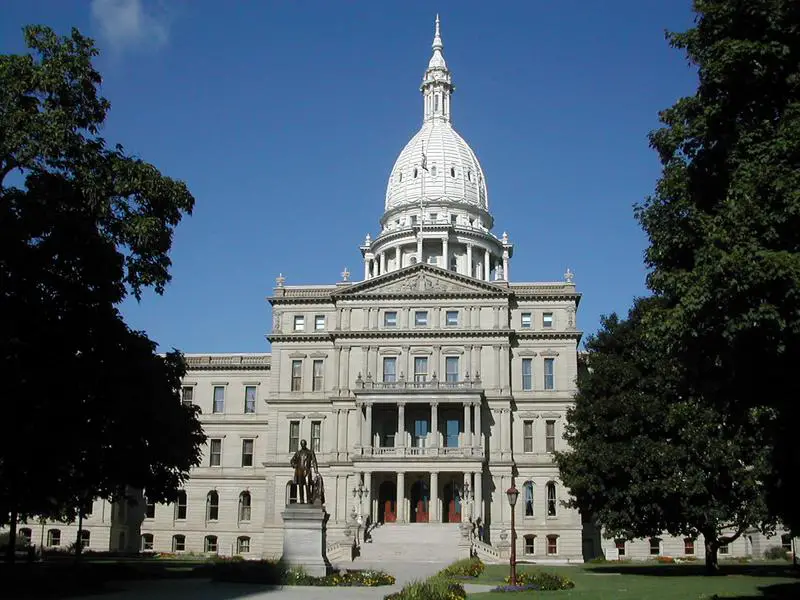
Michigan is the seventh fastest-shrinking state for 2026, the long tail of a story that started when the auto industry shrank. Detroit gets the headlines, having shed more than half its peak population, but the slow leak reaches smaller manufacturing towns too. People follow the jobs, and for a long stretch the jobs were leaving.
There are signs of life, with Detroit’s core clawing back and battery plants moving in. But Michigan still loses more residents to other states than it gains, mostly younger workers chasing warmer weather. Turning around decades of momentum takes time.

Ohio is the eighth fastest-shrinking state for 2026, another Rust Belt state watching its population drift down. The old industrial cities never fully replaced the manufacturing jobs they lost, and people followed the work out of state. Growth has flatlined while the Sun Belt booms.
It is not all decline, since Columbus is genuinely thriving and Intel’s chip project could change the math. But statewide, Ohio still sees more residents leave than arrive in a typical year. An aging population means deaths increasingly outpace births.

Pennsylvania is the ninth fastest-shrinking state for 2026, dragged down by one of the oldest populations in the country. When a state skews this gray, deaths start to outnumber births, and the count can fall even if nobody packs a moving truck. Rural counties and old coal and steel towns feel it most.
Philadelphia and Pittsburgh hold their own, and the Lehigh Valley has actually grown. But the small towns in between keep losing young people to bigger job markets. Without new arrivals to backfill them, the numbers keep ticking down.

New Mexico closes out the fastest-shrinking states at tenth for 2026, which surprises people who picture the Southwest as a growth magnet. The catch is the economy, because outside Albuquerque, Santa Fe, and the oil patch, good jobs are scarce. Working-age residents have been leaving for Texas, Arizona, and Colorado.
The scenery and the low cost of living should pull newcomers in. But a thin job market and stubborn poverty keep undercutting the pitch, and the birth rate is slowing. The Land of Enchantment is having a hard time getting people to stay.
The verdict
So what’s the fastest shrinking state in America for 2026?
What state is losing the most population? The state losing the most population is West Virginia based on the most recent Census data.
Read below to see how we crunched the numbers and how your state ranked. Or check out the cheapest states in America.
Saturday Night Science
How We Determined The Fastest Shrinking States In The US For 2026
The first thing that comes to most people’s minds when they think about determining the fastest shrinking states is simply how many people have left.
So we used Saturday Night Science to compare the population change of each state from the newly released 2020-2024 American Community Survey:
- Population Change Since 2010
We ranked each state from 1 to 50 based on population change since 2010, with one being the fastest shrinking. We crowned the state with the largest population decline the ‘Fastest Shrinking State In The US For 2026.’ We updated this article for 2026. This list is our eleventh time ranking the fastest shrinking states in the United States.
You can learn more about the top ten below or skip to the end to see the rankings for every state.
The full plate
All 50 states, ranked by population change
Click any column to sort. Search by state name.
| Rank | State | Population | 1YR Population Change | Population Change Since 2010 |
|---|---|---|---|---|
| 1 | West Virginia | 1,770,071 | -0.0% | -0.0% |
| 2 | Illinois | 12,549,689 | -0.0% | -0.0% |
| 3 | Mississippi | 2,939,690 | 0.0% | -0.0% |
| 4 | Connecticut | 3,617,176 | 0.0% | 0.0% |
| 5 | Louisiana | 4,573,749 | -0.0% | 0.0% |
| 6 | New York | 19,571,216 | -0.0% | 0.0% |
| 7 | Michigan | 10,037,261 | 0.0% | 0.0% |
| 8 | Ohio | 11,785,935 | 0.0% | 0.0% |
| 9 | Pennsylvania | 12,961,683 | -0.0% | 0.0% |
| 10 | New Mexico | 2,114,371 | 0.0% | 0.0% |
| 11 | Alaska | 733,406 | 0.0% | 0.0% |
| 12 | Kansas | 2,940,546 | 0.0% | 0.0% |
| 13 | Missouri | 6,196,156 | 0.0% | 0.0% |
| 14 | Wyoming | 584,057 | 0.0% | 0.0% |
| 15 | Vermont | 647,464 | 0.0% | 0.0% |
| 16 | Wisconsin | 5,910,955 | 0.0% | 0.0% |
| 17 | Kentucky | 4,526,154 | 0.0% | 0.0% |
| 18 | Rhode Island | 1,095,962 | 0.0% | 0.0% |
| 19 | Arkansas | 3,067,732 | 0.0% | 0.0% |
| 20 | California | 38,965,193 | -0.0% | 0.0% |
| 21 | Maine | 1,395,722 | 0.0% | 0.0% |
| 22 | Iowa | 3,207,004 | 0.0% | 0.0% |
| 23 | New Jersey | 9,290,841 | 0.0% | 0.1% |
| 24 | Indiana | 6,862,199 | 0.0% | 0.1% |
| 25 | Hawaii | 1,435,138 | -0.0% | 0.1% |
| 26 | Alabama | 5,108,468 | 0.0% | 0.1% |
| 27 | New Hampshire | 1,402,054 | 0.0% | 0.1% |
| 28 | Massachusetts | 7,001,399 | 0.0% | 0.1% |
| 29 | Maryland | 6,180,253 | 0.0% | 0.1% |
| 30 | Oklahoma | 4,053,824 | 0.0% | 0.1% |
| 31 | Nebraska | 1,978,379 | 0.0% | 0.1% |
| 32 | Minnesota | 5,737,915 | 0.0% | 0.1% |
| 33 | Virginia | 8,715,698 | 0.0% | 0.1% |
| 34 | Oregon | 4,233,358 | -0.0% | 0.1% |
| 35 | Tennessee | 7,126,489 | 0.0% | 0.1% |
| 36 | South Dakota | 919,318 | 0.0% | 0.1% |
| 37 | North Carolina | 10,835,491 | 0.0% | 0.1% |
| 38 | Georgia | 11,029,227 | 0.0% | 0.1% |
| 39 | Delaware | 1,031,890 | 0.0% | 0.1% |
| 40 | Montana | 1,132,812 | 0.0% | 0.1% |
| 41 | South Carolina | 5,373,555 | 0.0% | 0.1% |
| 42 | Arizona | 7,431,344 | 0.0% | 0.1% |
| 43 | Washington | 7,812,880 | 0.0% | 0.2% |
| 44 | North Dakota | 783,926 | 0.0% | 0.2% |
| 45 | Colorado | 5,877,610 | 0.0% | 0.2% |
| 46 | Nevada | 3,194,176 | 0.0% | 0.2% |
| 47 | Florida | 22,610,726 | 0.0% | 0.2% |
| 48 | Texas | 30,503,301 | 0.0% | 0.2% |
| 49 | Utah | 3,417,734 | 0.0% | 0.2% |
| 50 | Idaho | 1,964,726 | 0.0% | 0.2% |
Source: U.S. Census ACS 2020-2024.
There You Have It — The Fastest Shrinking States In The Country
The slowest growing states in the United States are West Virginia, Illinois, Mississippi, Connecticut, Louisiana, New York, Michigan, Ohio, Pennsylvania, and New Mexico.
Read on below to see how we crunched the numbers and how your state ranked.
Questions and answers
Fastest Shrinking States FAQs
What state is losing population the fastest?
West Virginia is the fastest shrinking state in America for 2026, followed by Illinois and Mississippi. The measure is population change since 2010.
Which states are shrinking?
The fastest shrinking states in the United States are West Virginia, Illinois, Mississippi, Connecticut, Louisiana, New York, Michigan, Ohio, Pennsylvania, and New Mexico. We ranked all 50 states by population change since 2010, using the latest Census data.
How do you measure shrinkage?
We compare each state’s 2010 Census population to the latest Census estimates and rank by percent change, smallest first. Actual counts, not projections.
What sits at the other end of this list?
Idaho is the fastest growing state in the country for 2026. Our separate fastest growing states ranking starts from that end of the table.
Why are these states losing people?
This ranking counts people rather than diagnosing causes. Jobs, housing costs, taxes, and weather all play their parts, but the table above only tracks the net change.